

Outback to Ocean
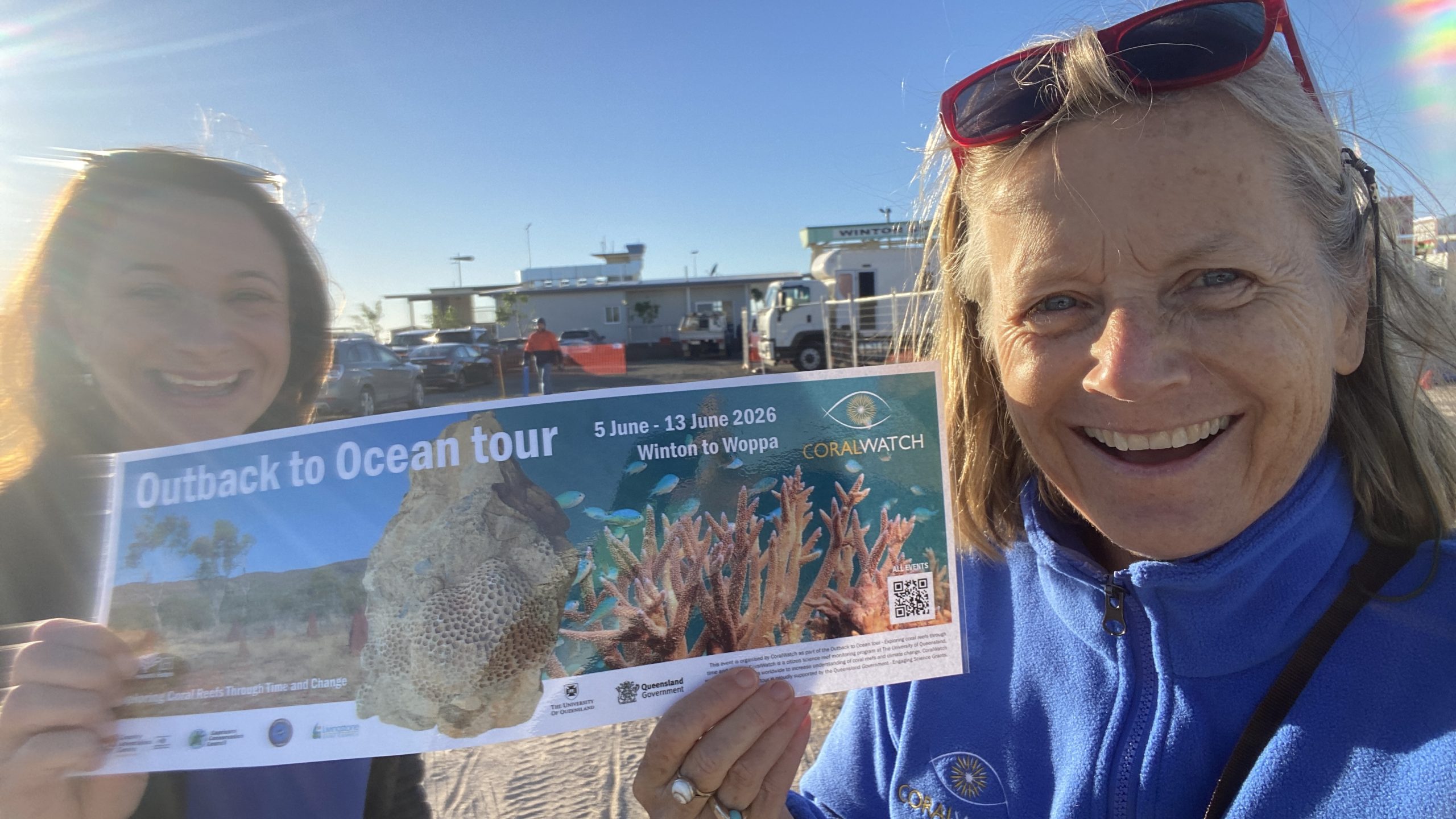
June 2026 – Winton to Woppa
Nine days. Ten events. Seven communities. More than 550 conversations about coral reefs.
In early June, the CoralWatch team packed our suitcases full of coral skeletons, fossils, microscopes, virtual reality headsets, augmented reality experiences, and plenty of enthusiasm before setting off on an unforgettable journey across regional Queensland.
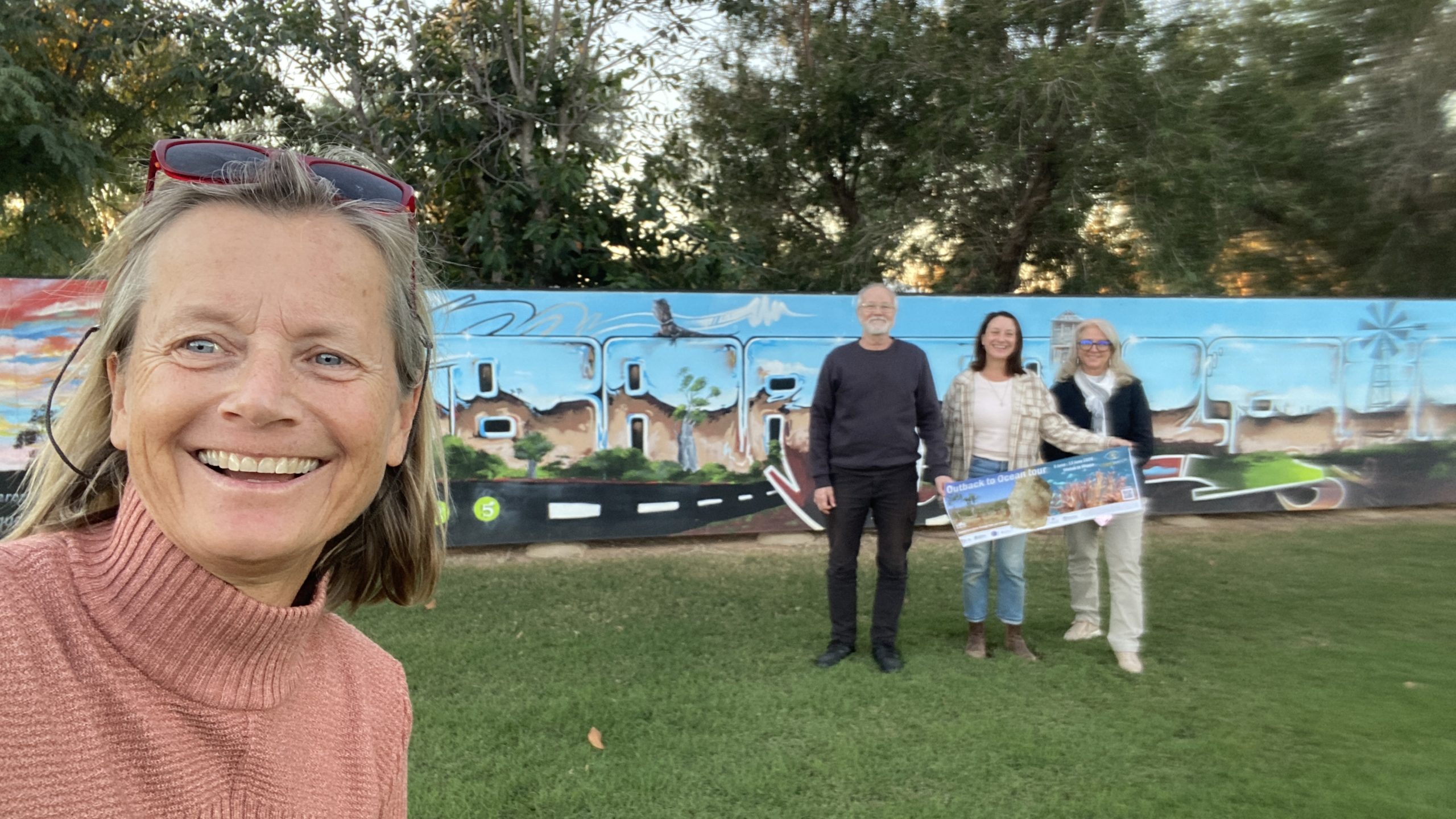
The Outback to Ocean tour was designed to connect communities with the remarkable story of coral reefs, from the ancient inland seas that once covered much of western Queensland to the vibrant coral reefs found along our coastline today. Along the way we met students, teachers, families, travellers, scientists, and community members, sharing stories, asking questions, and discovering just how connected Queensland’s landscapes really are.
Across nine days, three CoralWatch staff, nine Youth Ambassadors, and guest scientist Professor Gregg Webb delivered ten community events in seven locations, reaching more than 555 people. Every stop was unique, but each reinforced the same message: coral reefs are part of Queensland’s story, no matter how far you live from the coast.
Winton – Where the Reef Story Begins – June 6th
Our journey began in Winton, where dinosaur fossils and the red earth might seem worlds away from tropical coral reefs. Yet millions of years ago this landscape lay beneath the waters of the Eromanga Sea, making it the perfect place to begin telling the story of Queensland’s reefs.
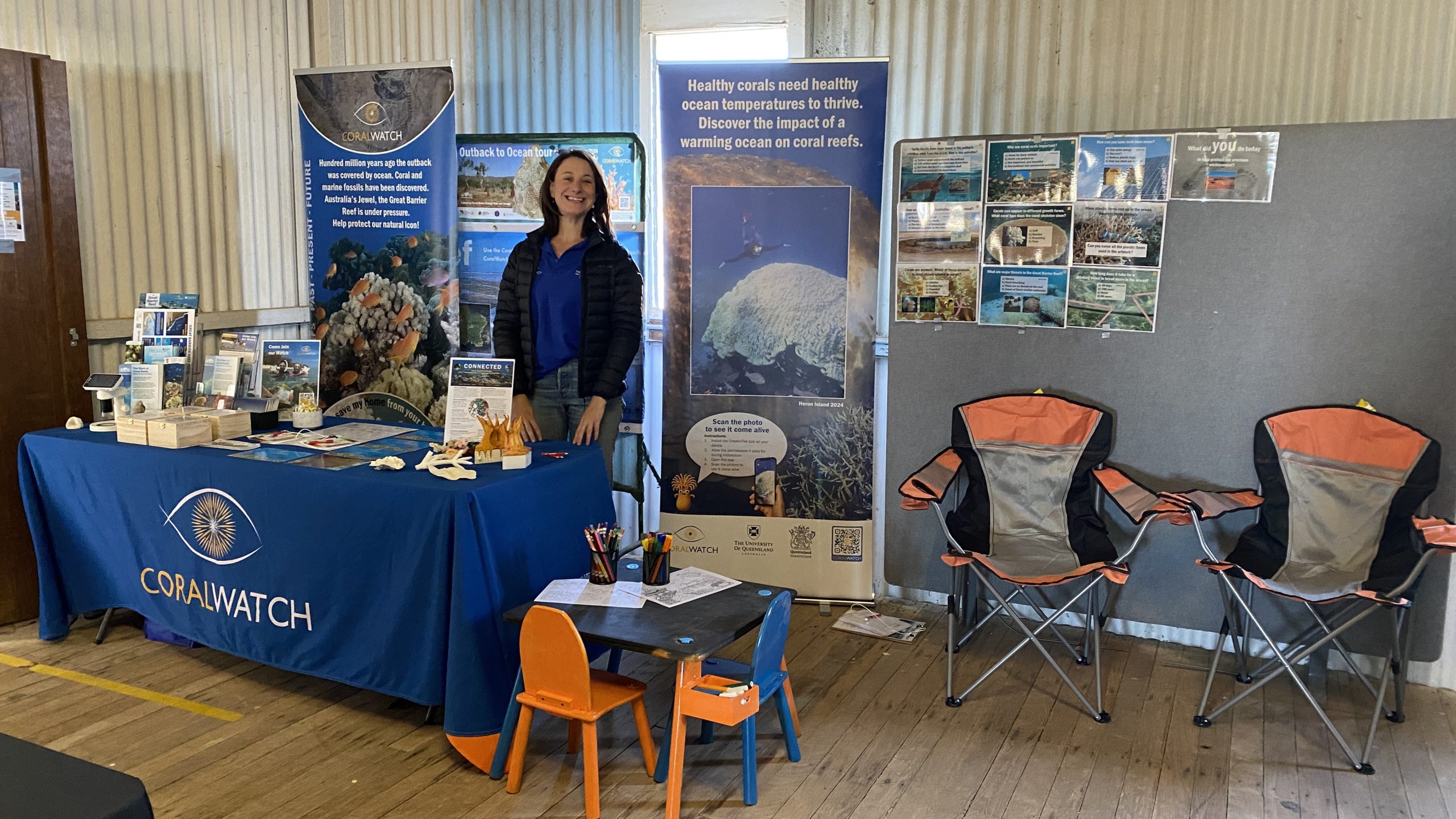
At the Winton Show, visitors explored coral fossils beneath the microscope, tested their reef knowledge through interactive quizzes, immersed themselves in coral reefs through virtual reality, and met Polly the Coral Polyp, our new augmented reality experience that follows one coral’s journey through the 2024 mass bleaching event at Heron Reef while highlighting the actions we can all take to support a healthier future for reefs.
One of the highlights of the day was hearing visitors share their own reef experiences. Some were preparing for their first visit to the Great Barrier Reef, while others reflected on memories stretching back decades. Teachers from across Central Queensland also stopped by, opening conversations about bringing reef science into classrooms throughout the region.
A huge thank you to the Country Universities Centre Winton for helping make our first event such a success. The tour might have moved on, but a CoralWatch Library borrow box is now available through the Winton STEM hub for anyone interested in learning more.
Barcaldine – Connecting Fossils to Living Reefs – June 8th
Leaving Winton behind, we travelled east to Barcaldine State School, where curiosity and enthusiasm quickly filled the classroom.
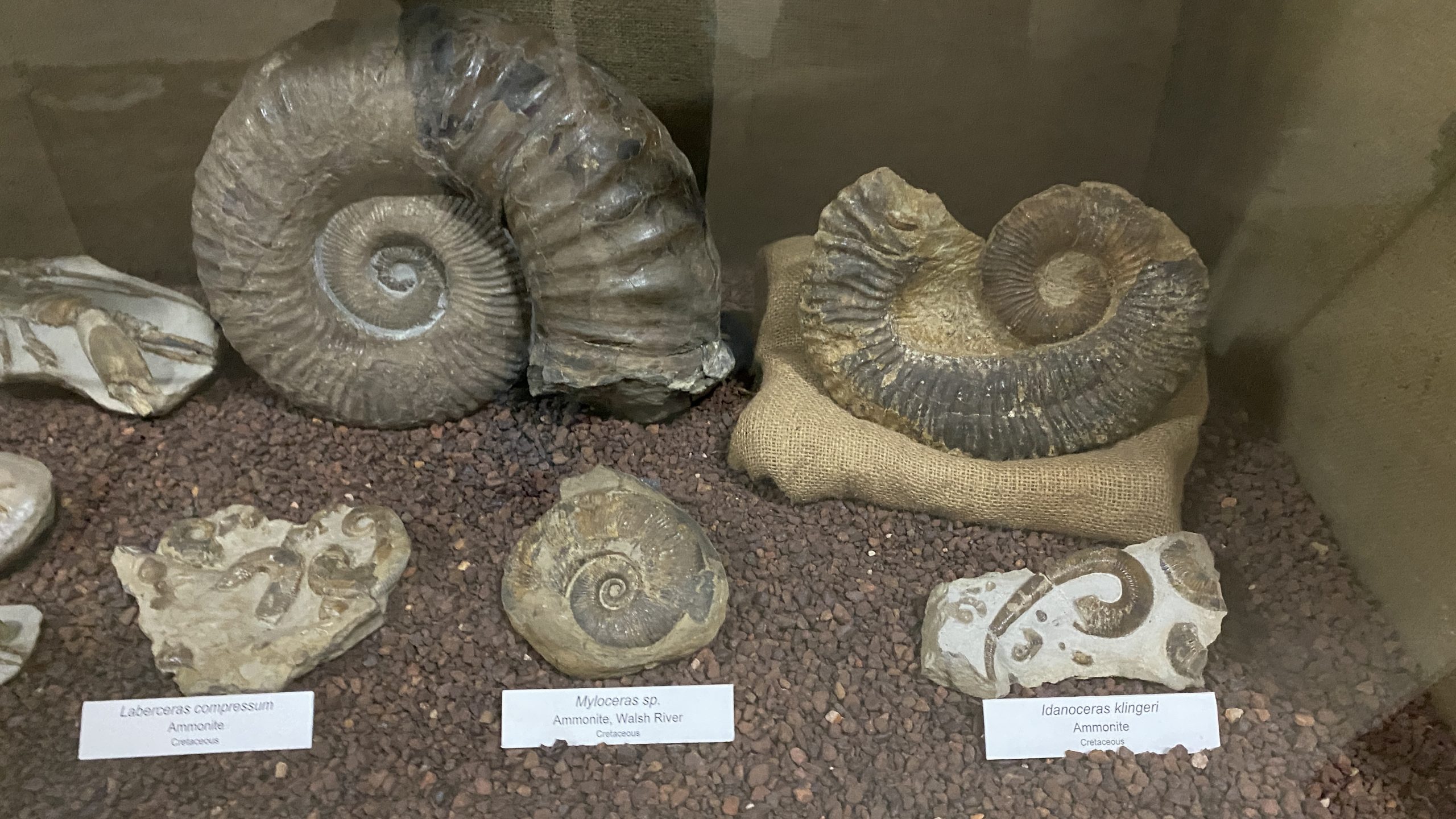
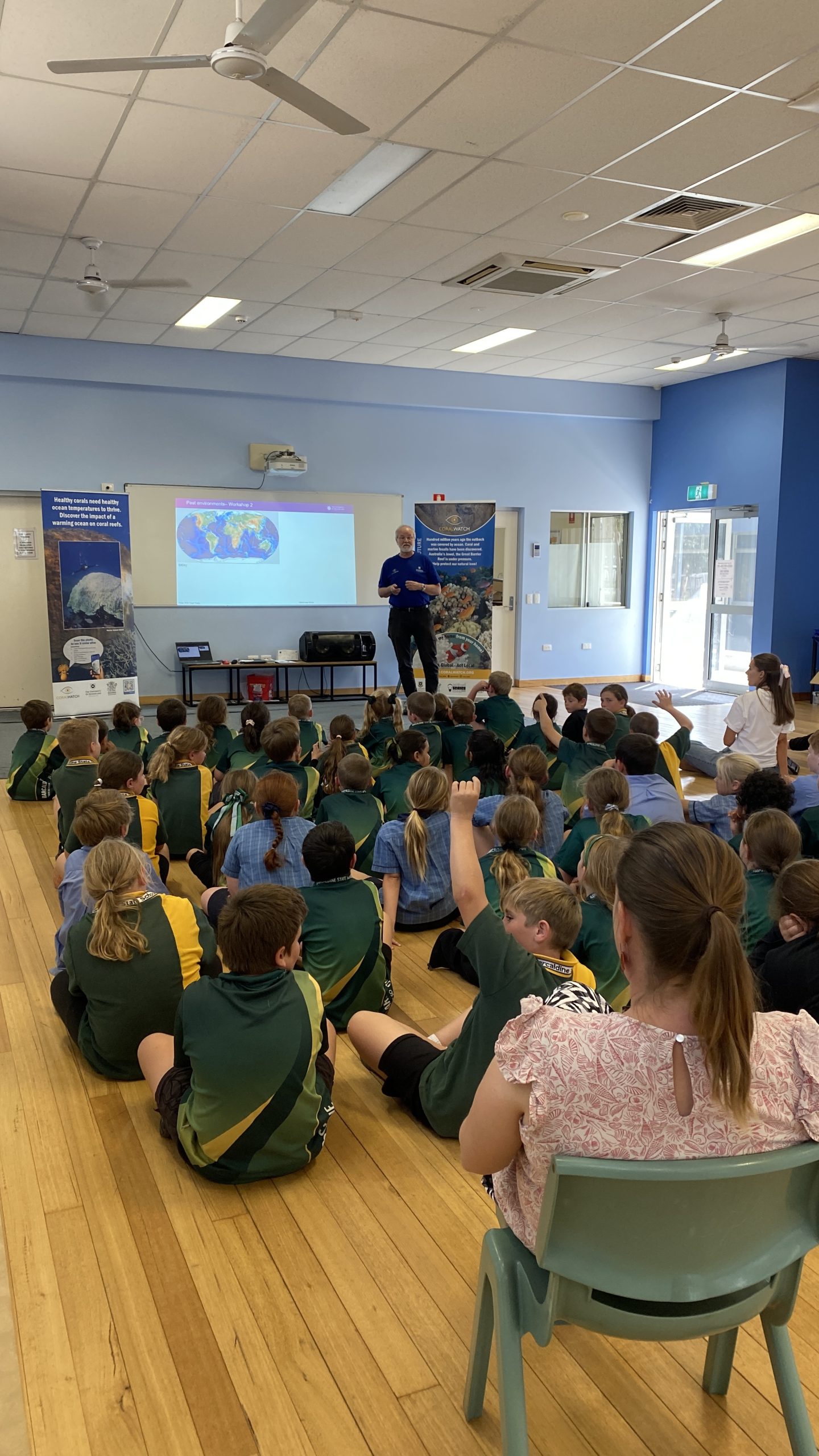
Professor Gregg Webb captivated students by explaining how fossils discovered around Barcaldine reveal that this now-dry landscape was once part of a vast inland sea. Using local fossils and rock samples, students explored how scientists reconstruct ancient environments and how these geological stories help explain the evolution of the Great Barrier Reef we know today.
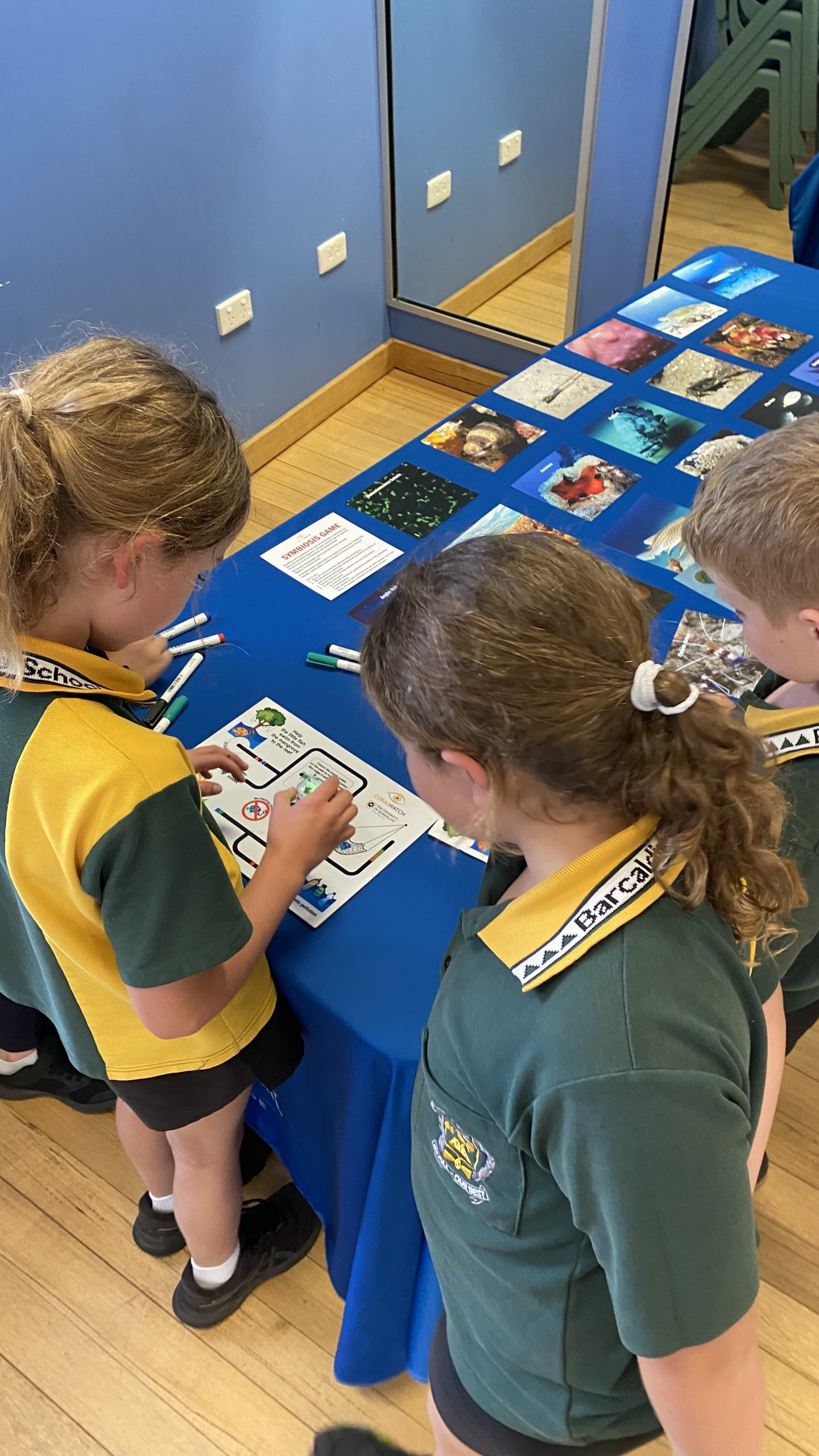
The learning quickly became hands-on. Students matched coral colours using the Coral Health Chart, carried out simulated coral health surveys on our virtual reef, explored underwater environments through virtual reality, programmed OzBots through reef-themed STEM challenges, created reef-inspired artwork, and even brought along their own fossils for Professor Webb to identify.
Throughout the day, discussions centred on what coral reefs are, why they matter, how climate change is affecting reef ecosystems, what causes coral bleaching, and how scientists monitor reef health. Most importantly, students discovered that meaningful climate action doesn’t have to happen on the coast—people living hundreds of kilometres inland also have an important role to play in protecting Queensland’s reefs.
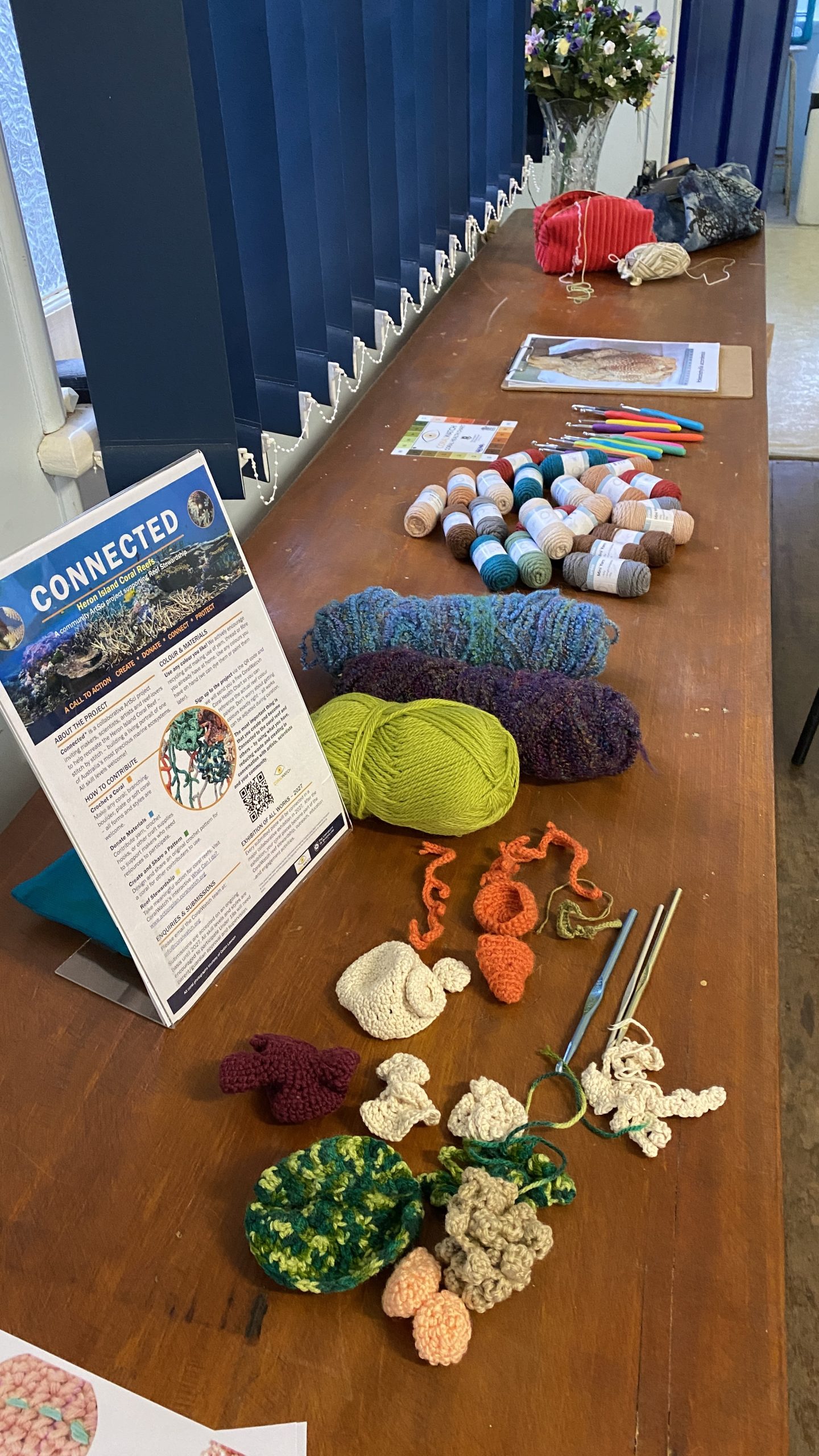
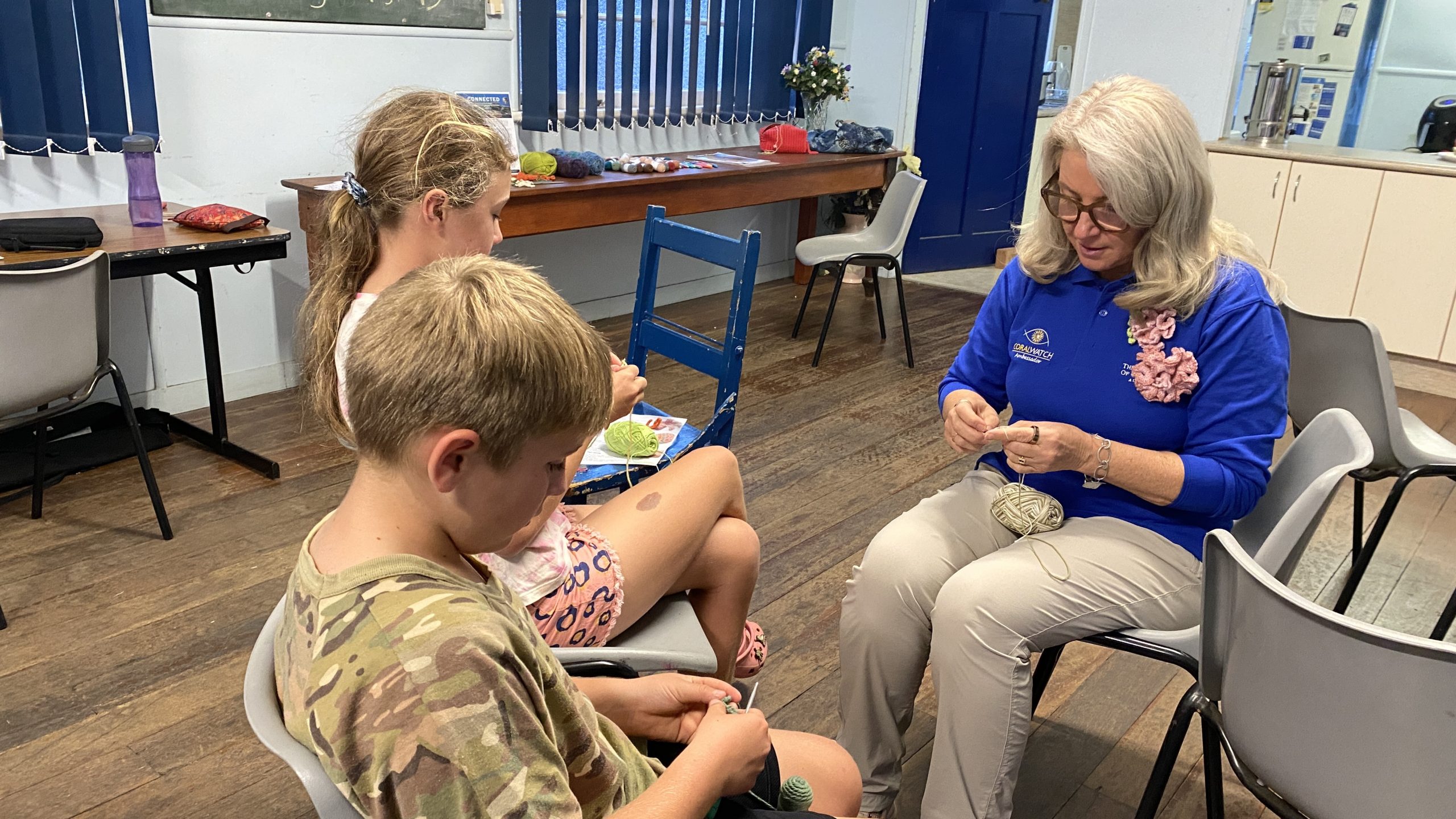
Later in the day, we joined members of the Barcaldine Country Women’s Association, where conversations about coral reefs continued over crochet hooks and cups of homemade pumpkin soup.
Together with Dr Anita Milroy, we introduced CONNECTED, a collaborative art–science project inviting communities to help recreate the Heron Island coral reef, stitch by stitch. The project brings together makers, scientists, artists, and reef lovers to create a living portrait of one of Australia’s most precious marine ecosystems while fostering conversations about reef conservation, creativity, and our shared connection to place.
A heartfelt thank you to Kate and the Barcaldine Country Women’s Association for so warmly hosting us. We can’t wait to see how CONNECTED grows as more communities add their own unique contributions.
Longreach – Ancient Seas, Future Reefs
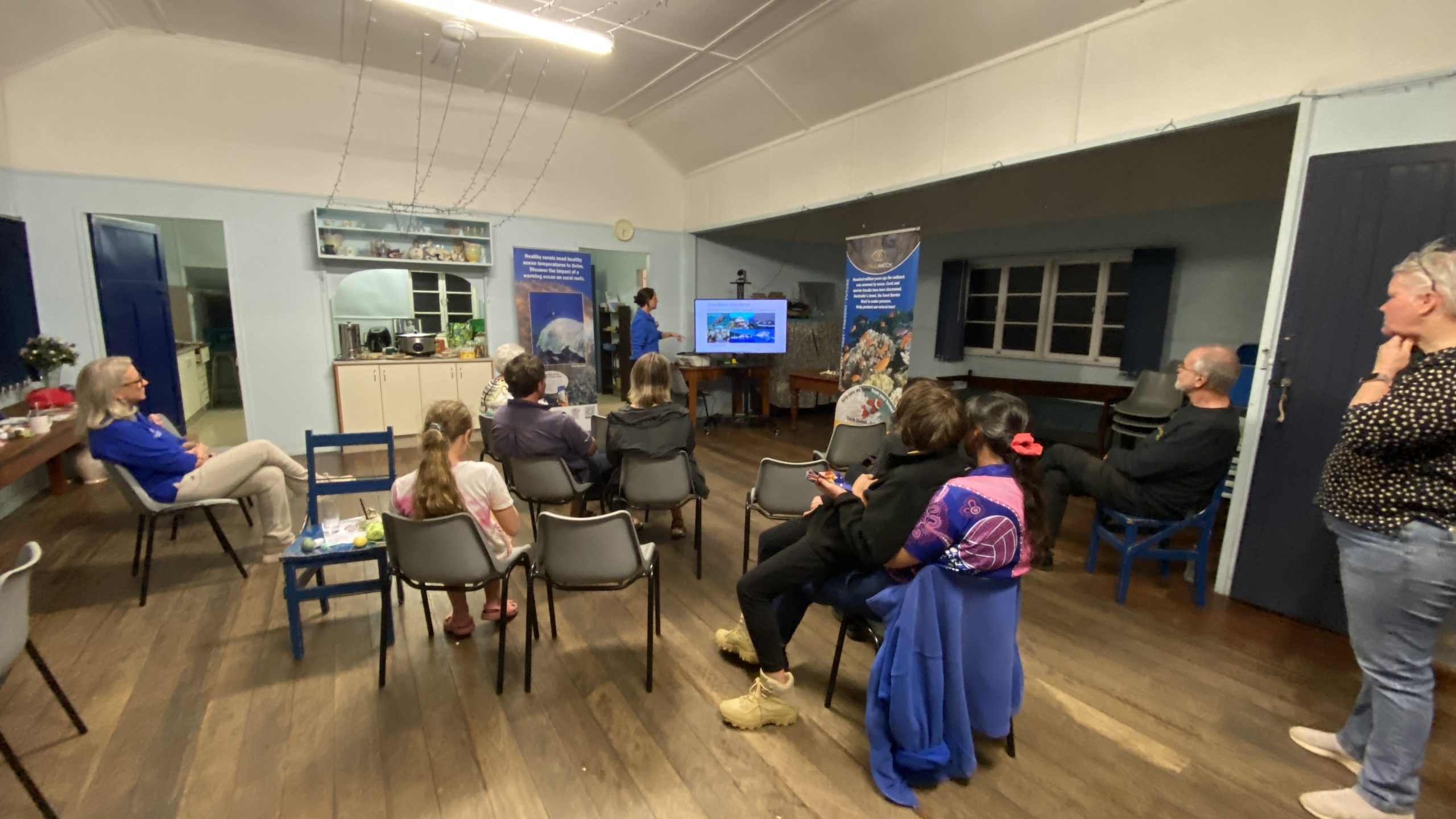
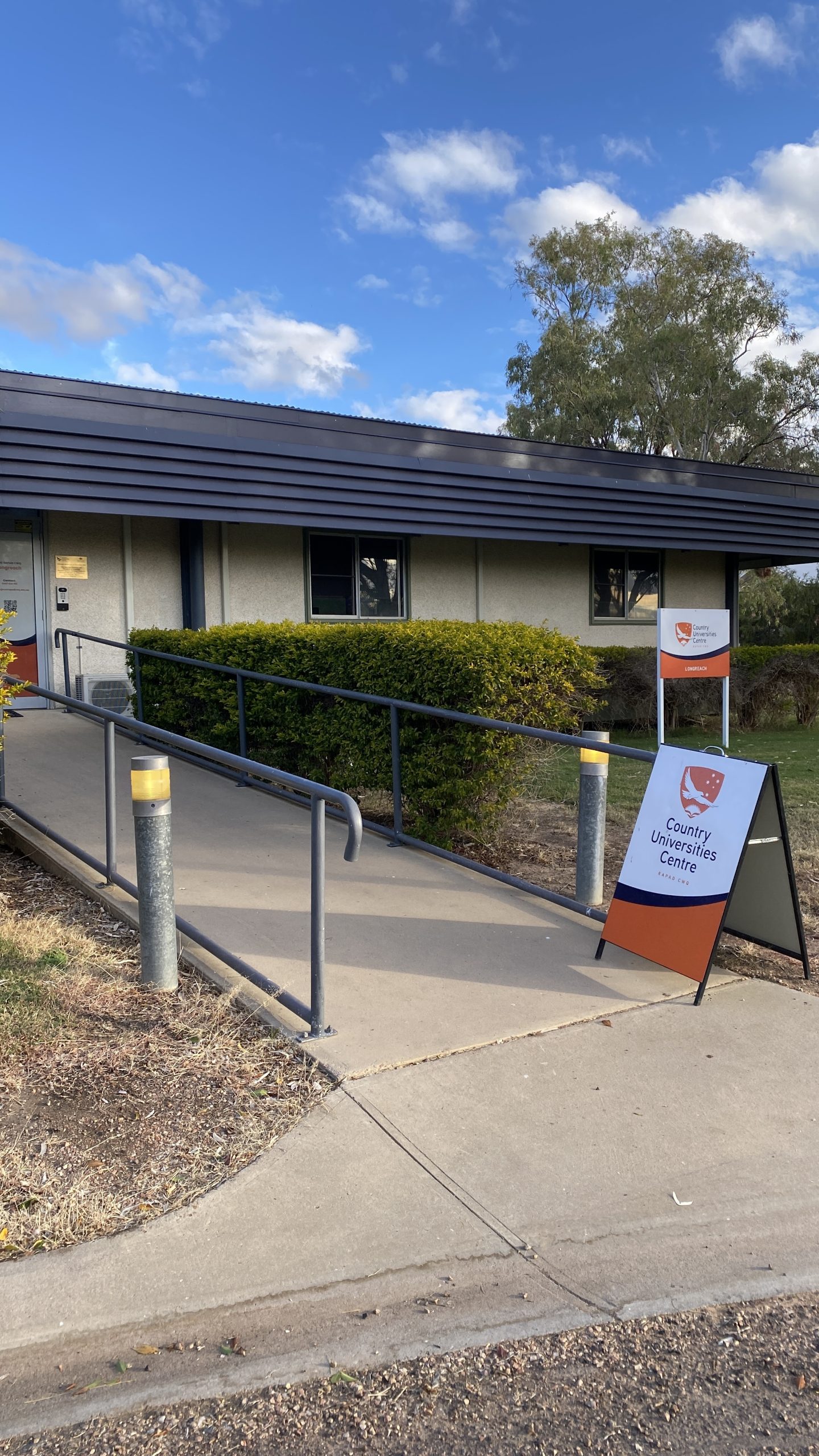
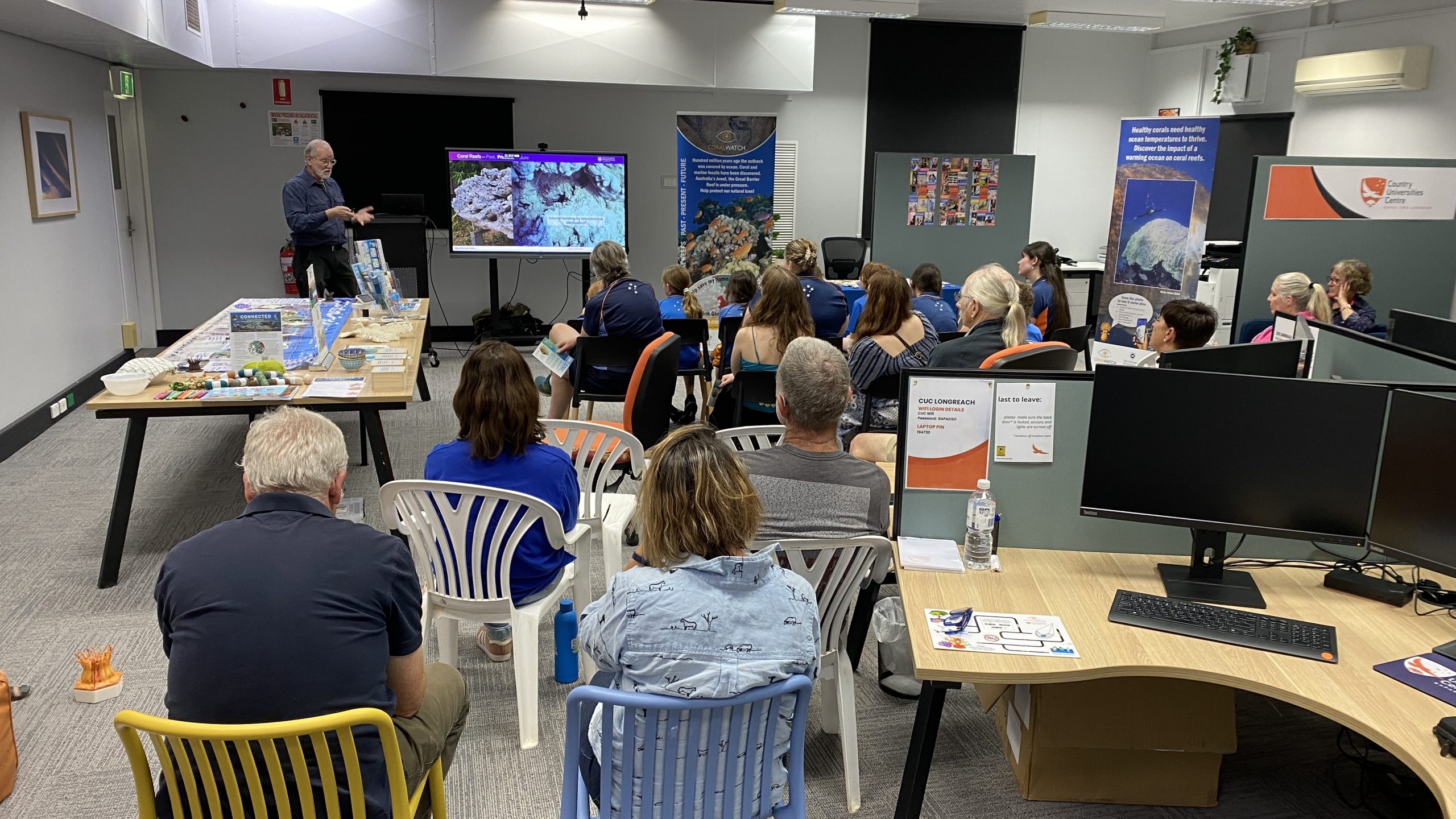
Our next stop was Longreach, for a community evening at the Country Universities Centre exploring the journey “From Ancient Fossils to the Great Barrier Reef.”
Families, students, and community members joined us to step back more than 100 million years, discovering a time when today’s outback was covered by the warm waters of the Eromanga Sea. Professor Gregg Webb brought this remarkable history to life, sharing stories of the ancient corals, and other fossils that have been uncovered across western Queensland, and explaining how these ancient environments shaped the reefs we see today.
We also explored the coral reefs through a range of hands on activities including virtual and augmented reality and learning how scientists assess coral health using the same Coral Health Chart
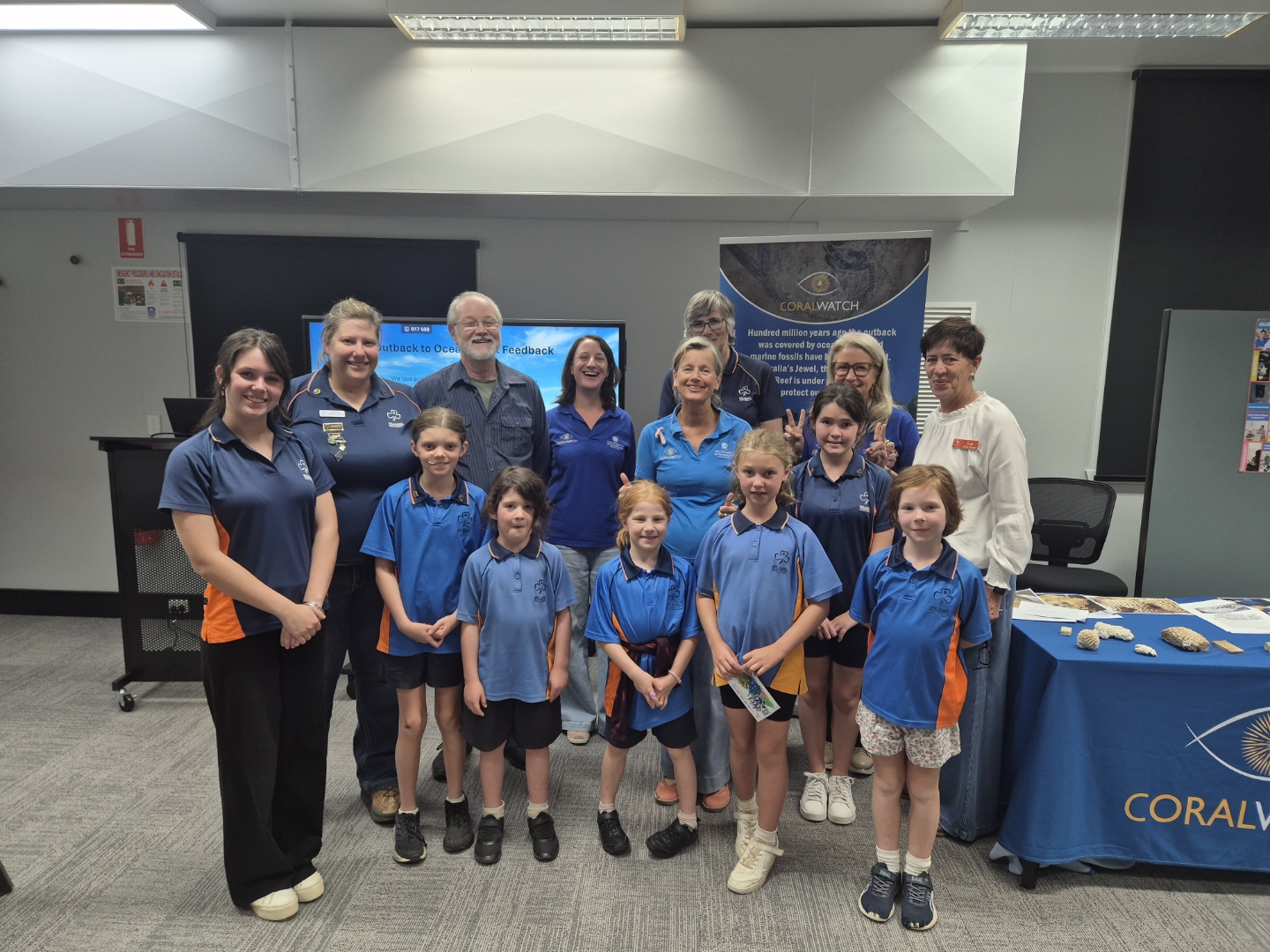
One of the highlights of the evening was meeting members of the local Girl Guides group, who joined us as part of their Nature Badge activities. It was wonderful to see their curiosity and enthusiasm as they explored the connections between the outback, the ocean, and the role young people can play in caring for Queensland’s unique environments.
A sincere thank you to the Country Universities Centre Longreach for hosting us and helping bring the community together for such a memorable evening.
Ilfracombe – Finding Connections – June 10th
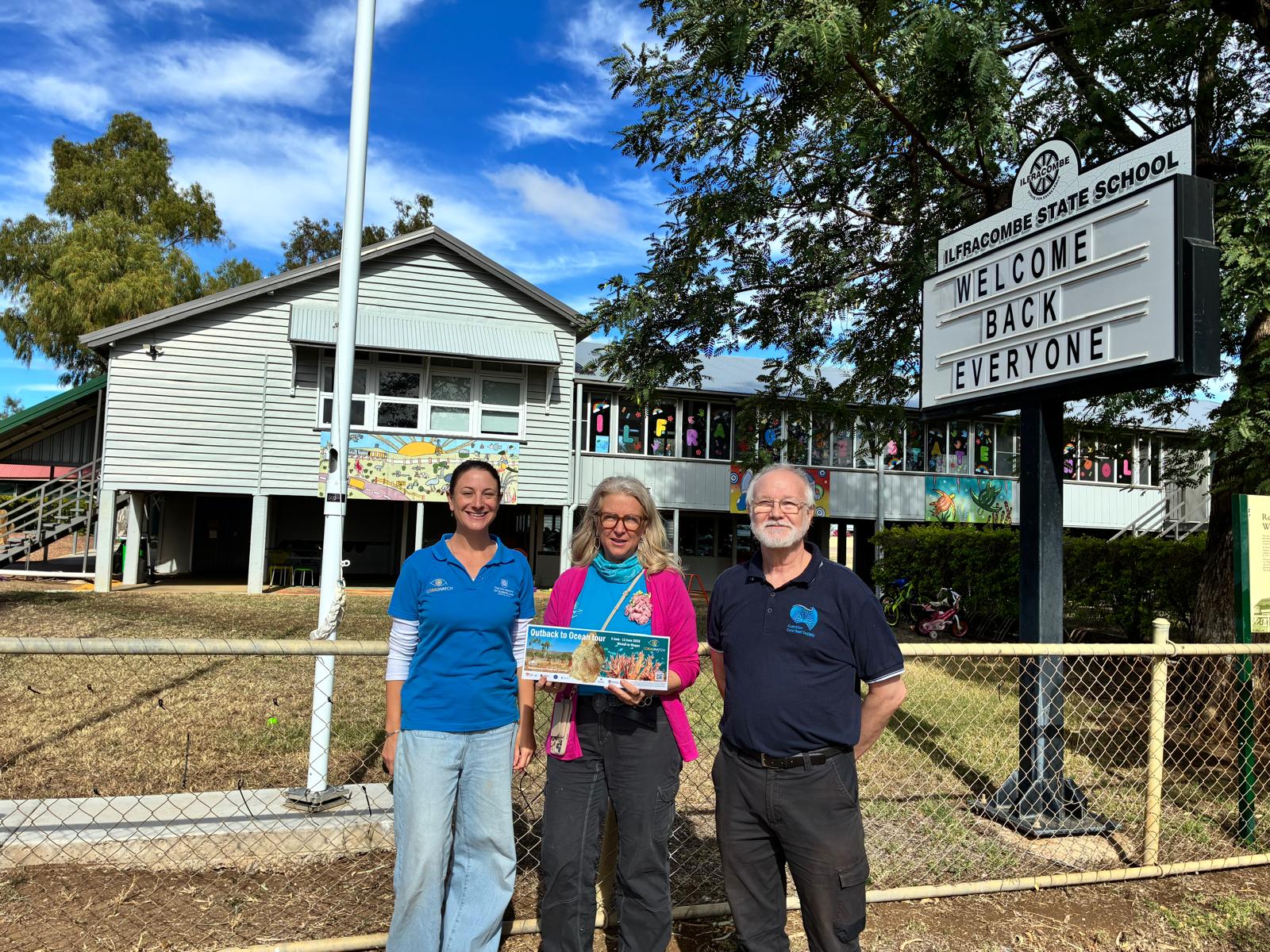
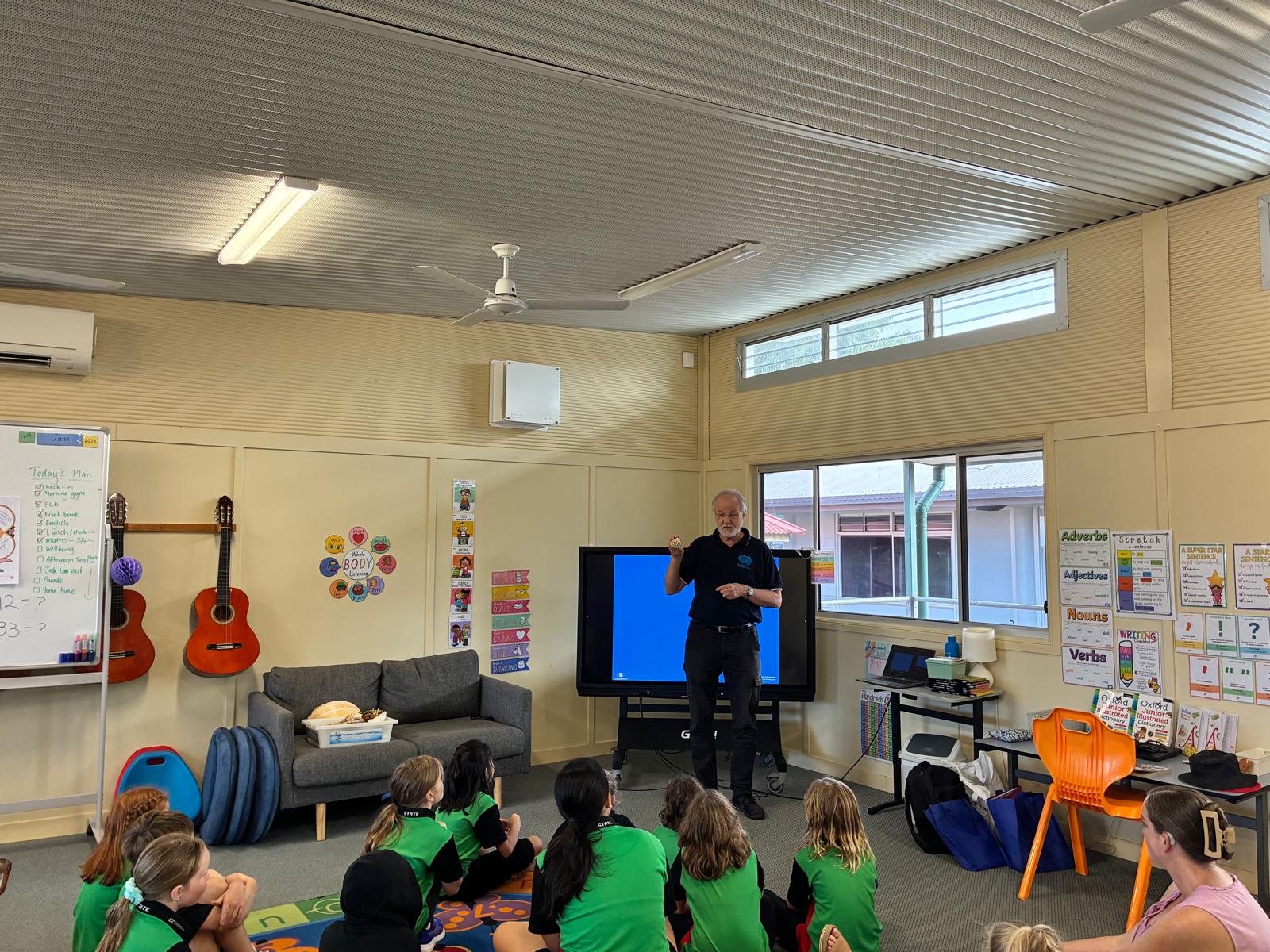
JOne of the most memorable stops on our journey was our visit to Ilfracombe State School. Although a small school, the students’ curiosity and enthusiasm made for a truly special morning.
Together we explored the story of coral reefs—both ancient and modern—discovering how reefs have changed over millions of years and why they remain some of the most important ecosystems on Earth today. Students then engaged in hands-on activities, including colouring reef organisms and playing a symbiosis game to understand the relationships that help coral reefs thrive. We also discussed ecological interactions found in the ocean and compared them with those in the landscapes surrounding their own community.
A particular highlight was the students’ shell collection, which they proudly showed us. It sparked wonderful conversations about marine life, biodiversity, and the many ways people can connect with the ocean, no matter where they live.
Woorabinda Indigenous Community – Learning Across Knowledge Systems– June 11
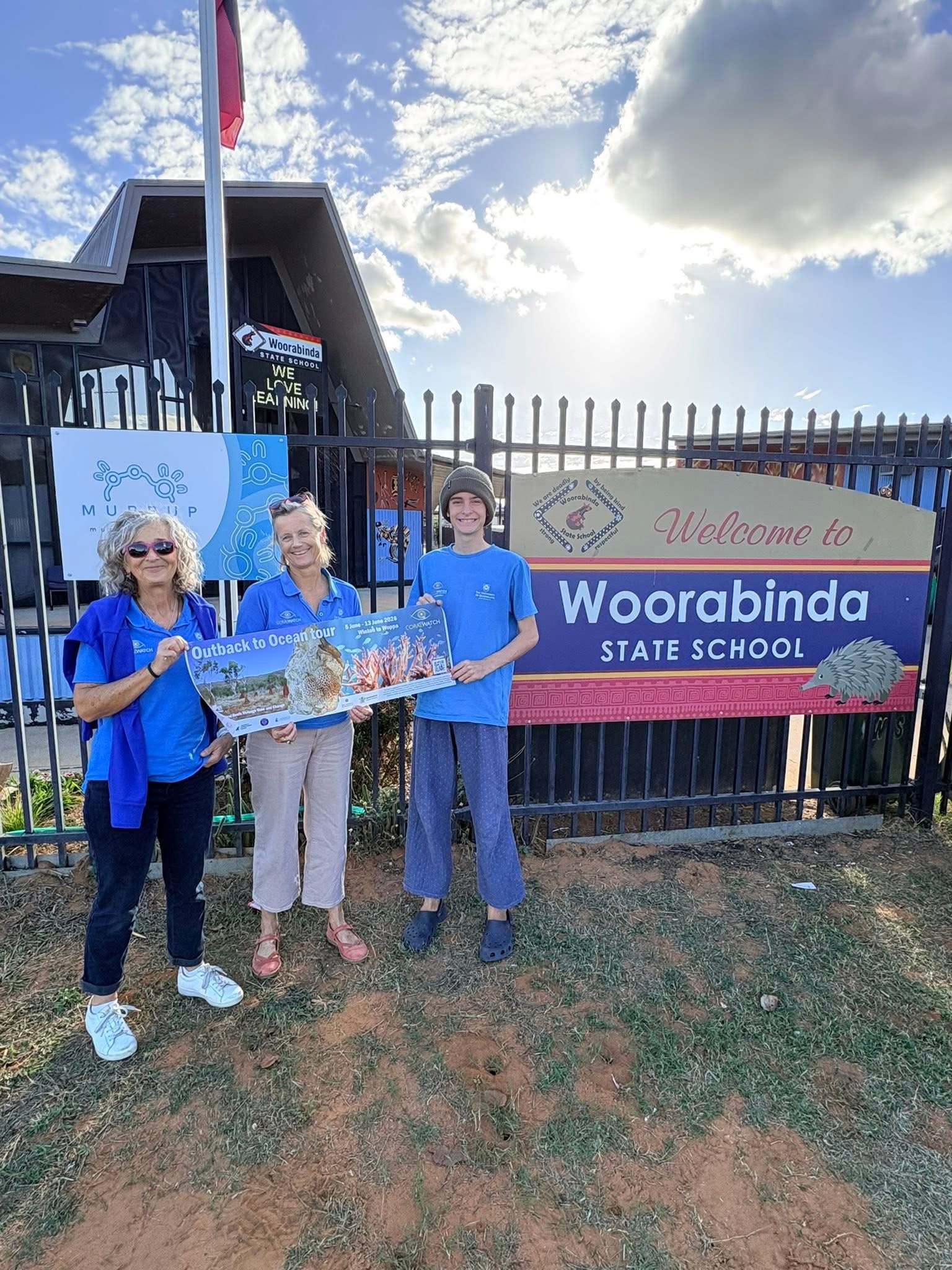
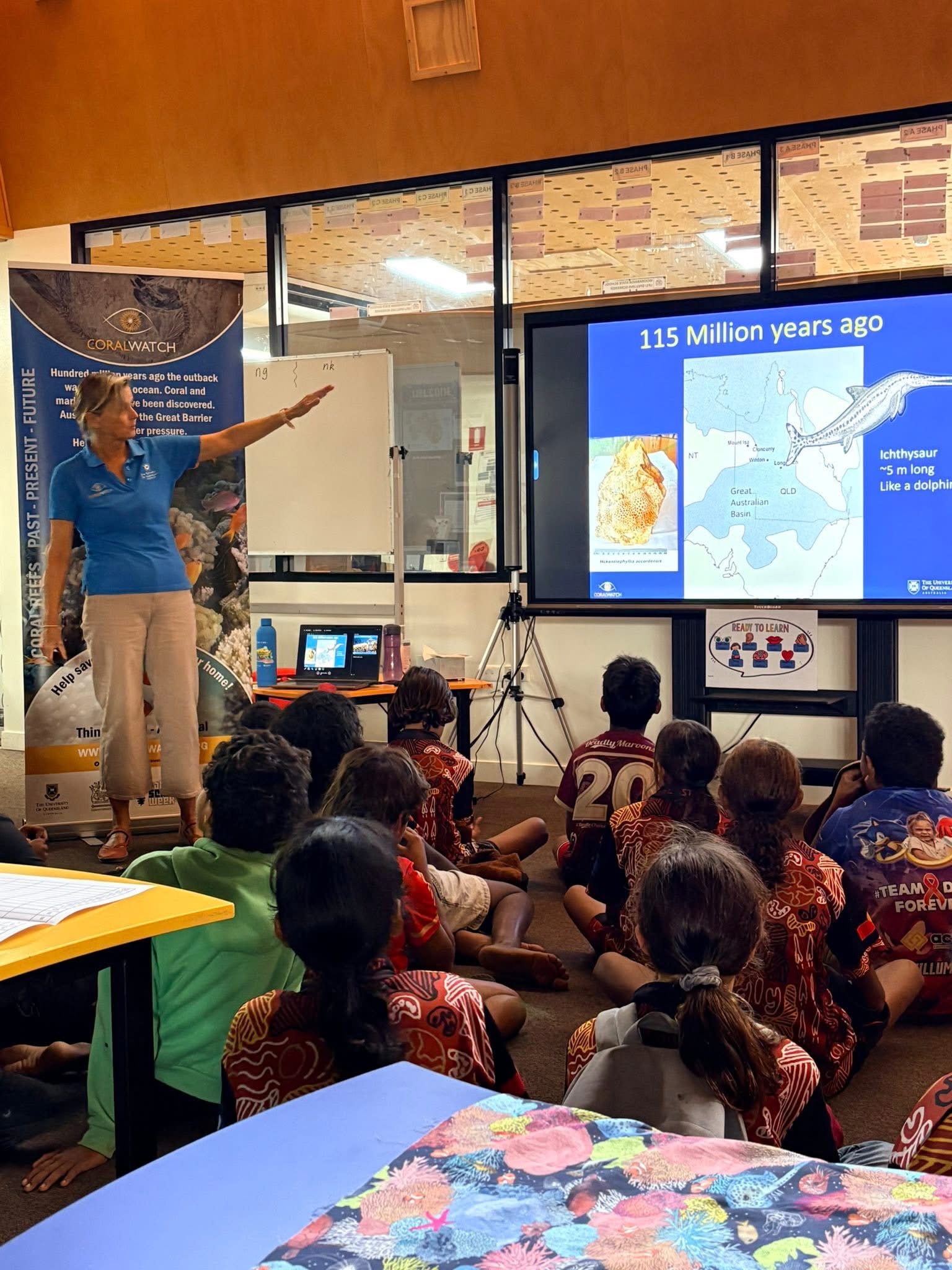
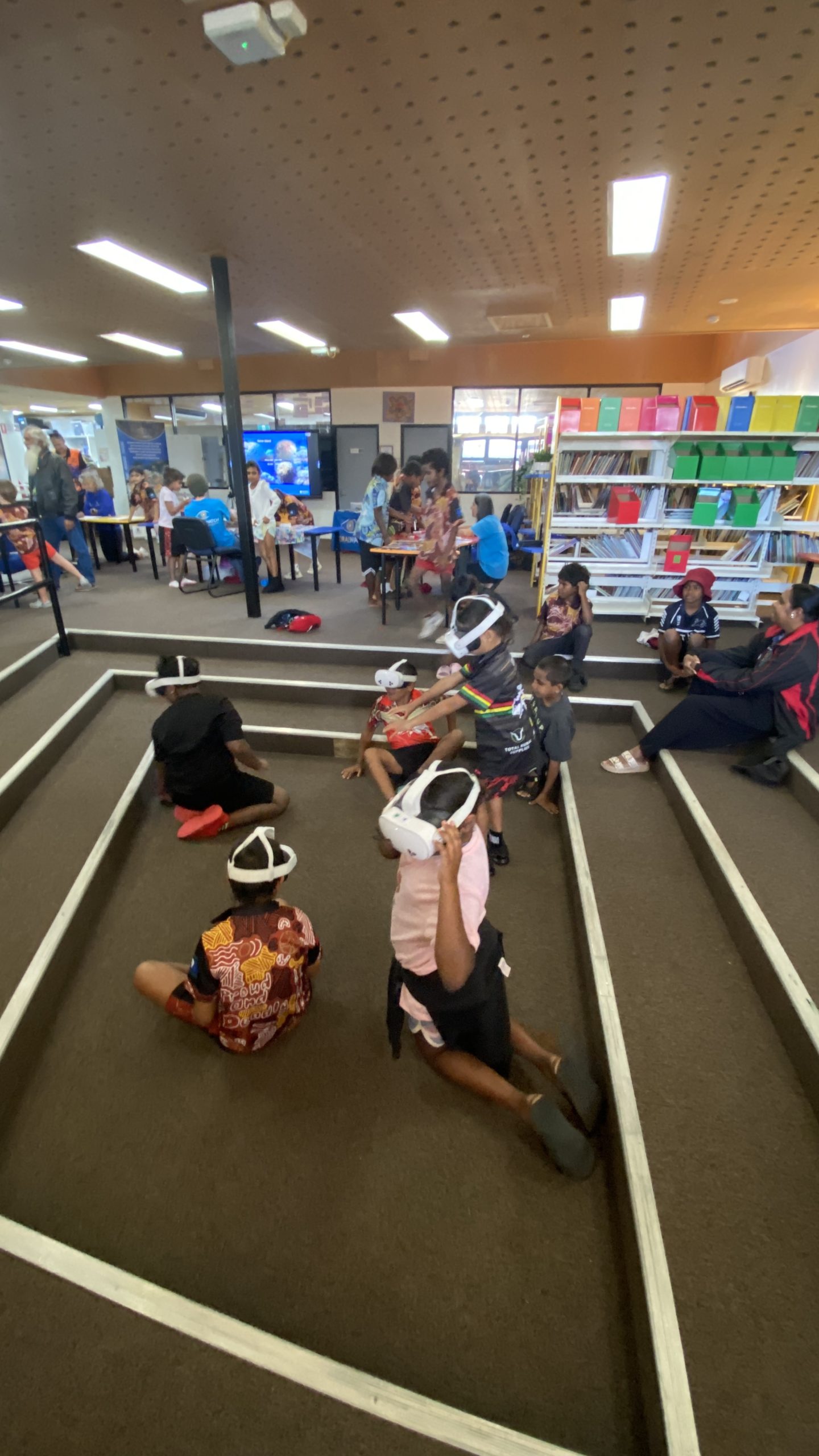
At Woorabinda Indigenous Community, we delivered a hands-on science session for Years 3/4 and 5/6 students alongside their science teacher, Jay.
Using the school library as a shared learning space, students explored coral reefs through a range of interactive activities, including virtual reef experiences, VR headsets, coral skeletons and microscopes, an online quiz, symbiosis game, and OzBots.
We were also grateful to hear cultural perspectives shared by Uncle Milton, which added important context and depth to the learning.
Across the day, we engaged with approximately 50 students, 8 teaching staff, and Uncle Milton, making it a rich and collaborative experience of learning and exchange.
Rockhampton Show Day – Reef Science on Stage – June 12
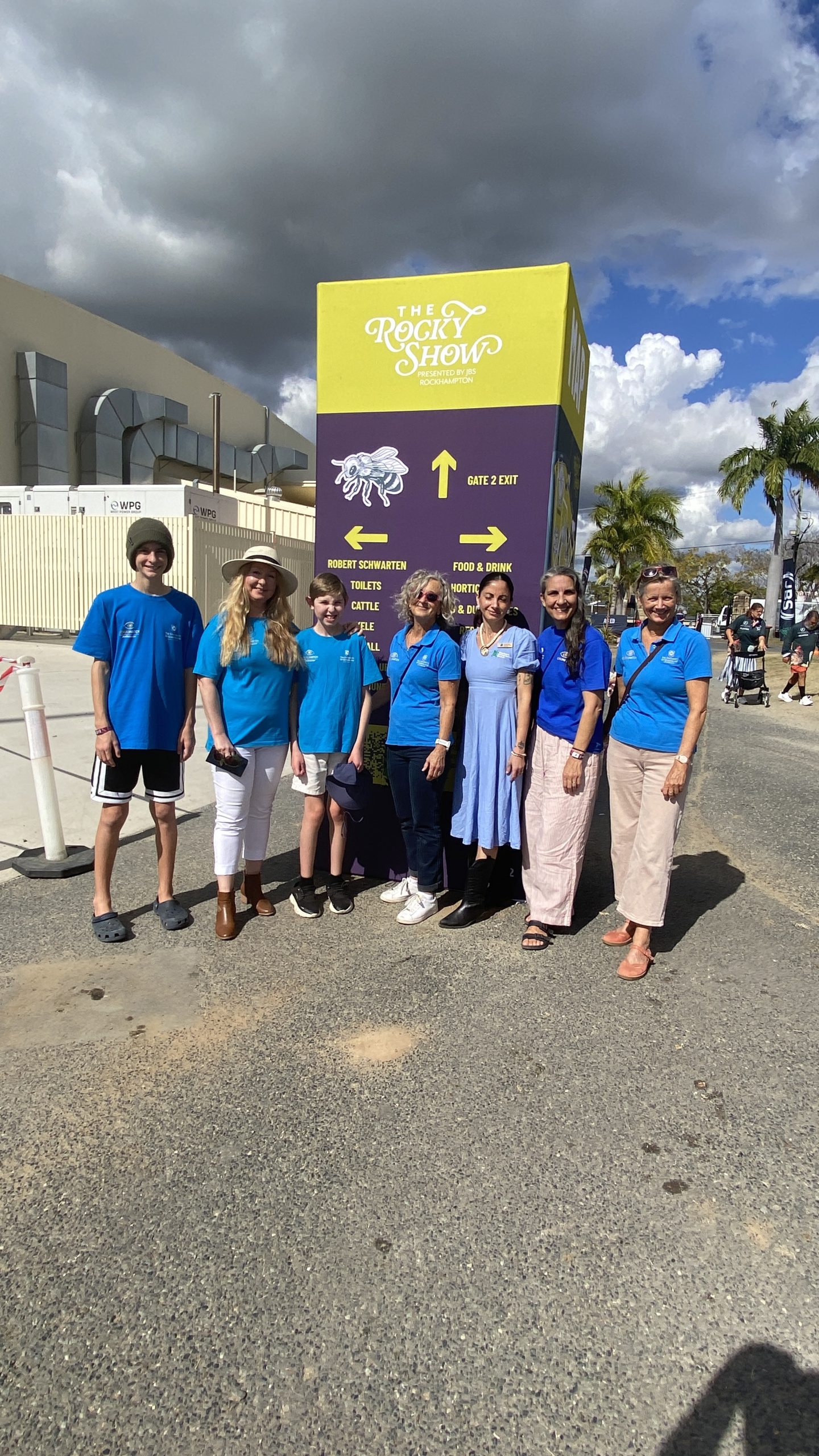
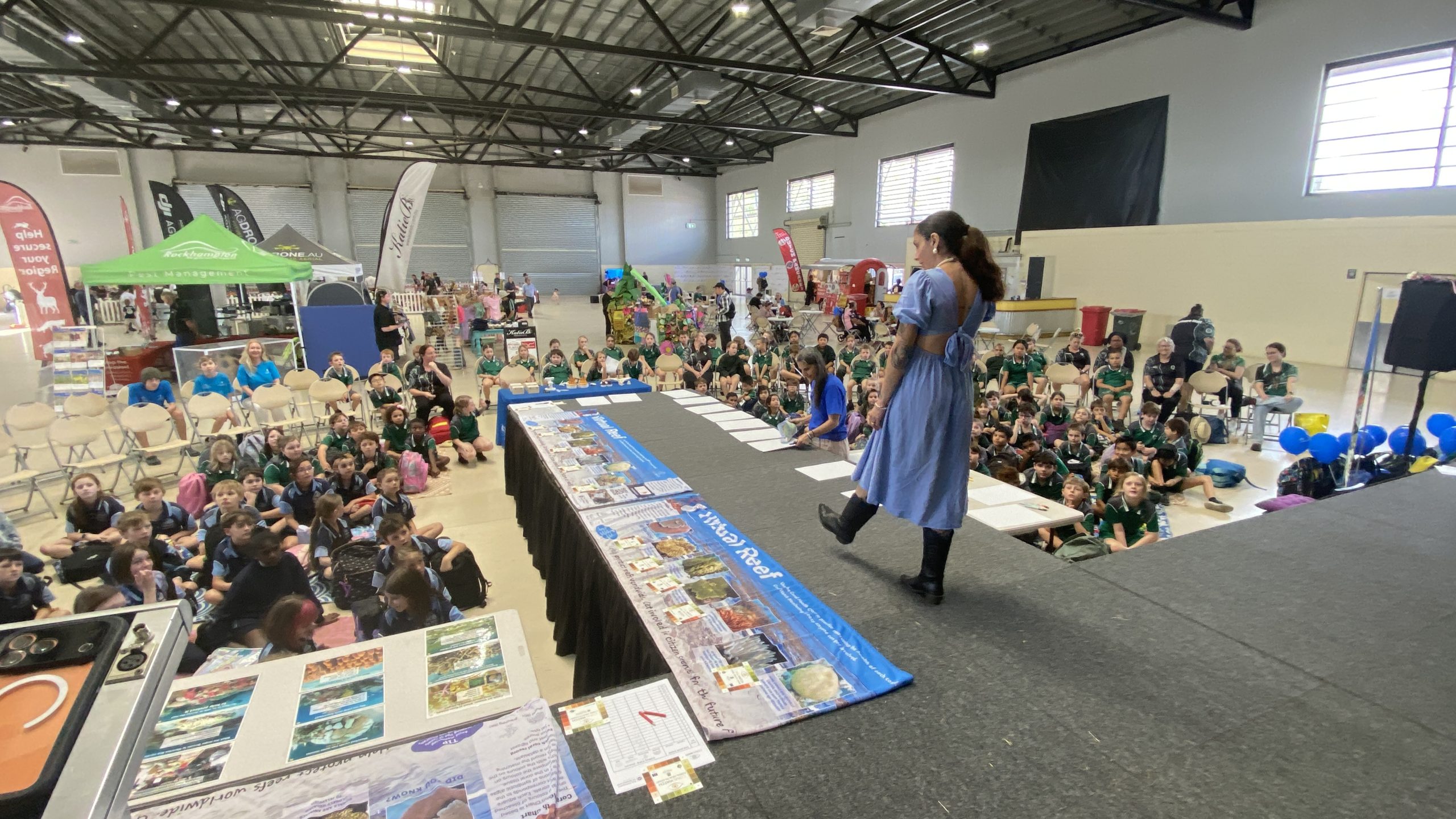
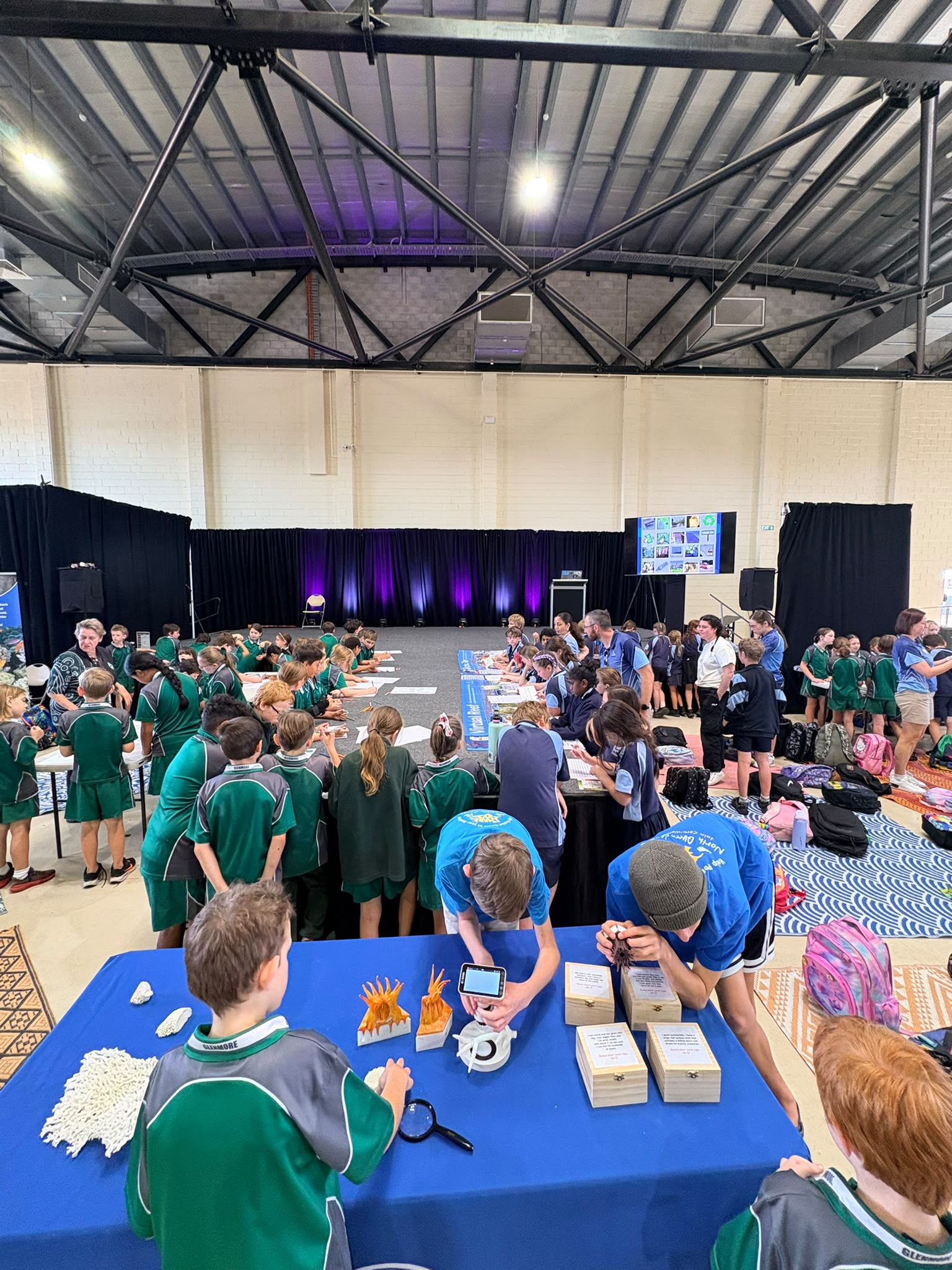
As part of the Rockhampton Show Day, we delivered our largest event of the tour at the Robert Schwarten Pavilion.
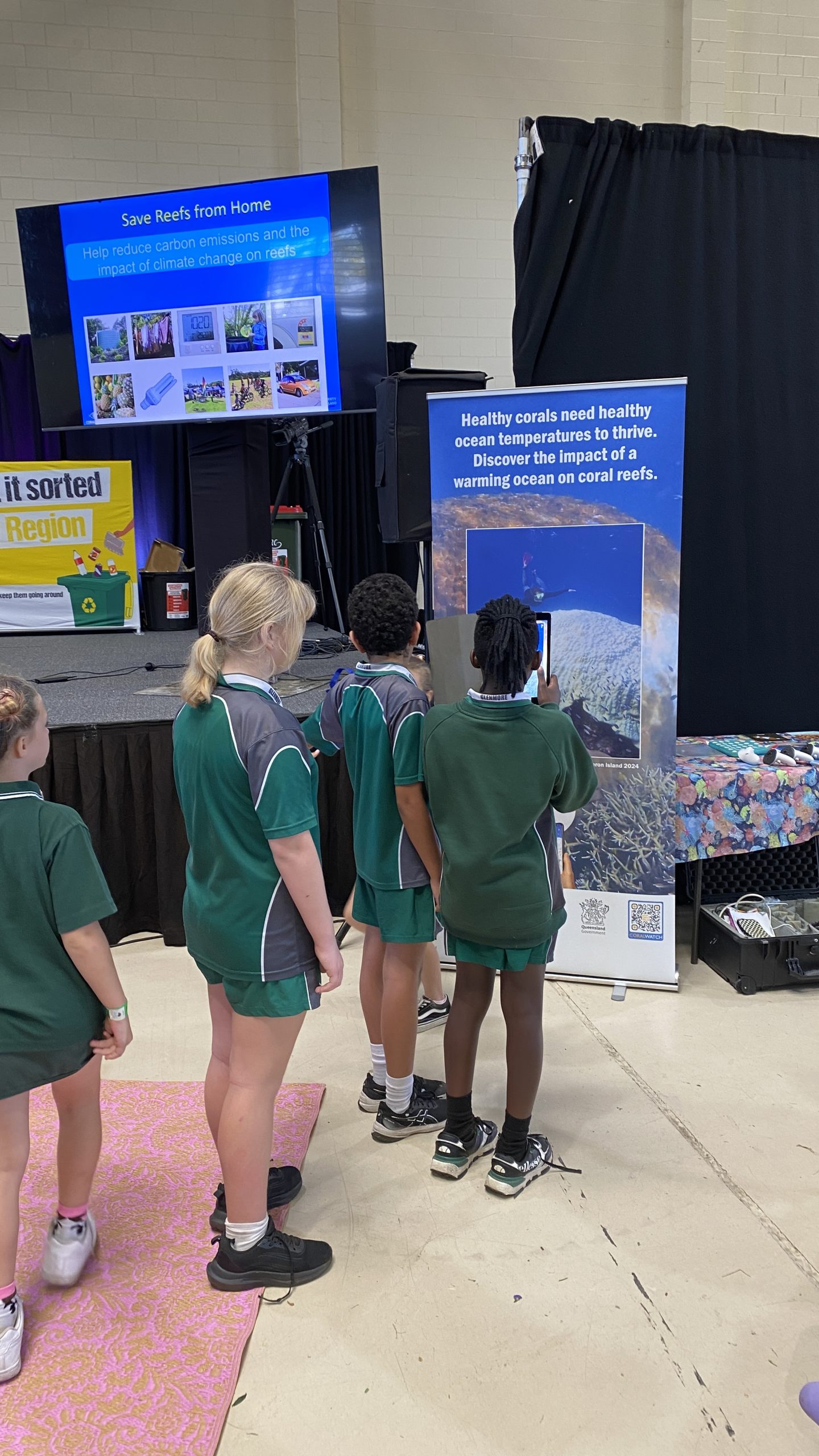
A short stage presentation introduced the story of coral reefs, followed by a full program of interactive activities including virtual reality experiences, the Virtual Reef, large-scale reef art and posters, quizzes, a symbiosis game, and coral skeleton exploration. Teachers were also provided with curriculum resources to support continued learning in the classroom.
The program ran across two sessions (9:30am and 12:30pm), engaging 223 students and 16 teachers, with a total reach of approximately 230 participants. This was the biggest single event of the entire Outback to Ocean tour and would not have been possible without the support of our Ambassadors Elijah, Kerrie, Freddie, and Olga, as well as our partners at the Capricorn Conservation Council.
Woppa / Great Keppel Island – Citizen Science Community Day – June 13
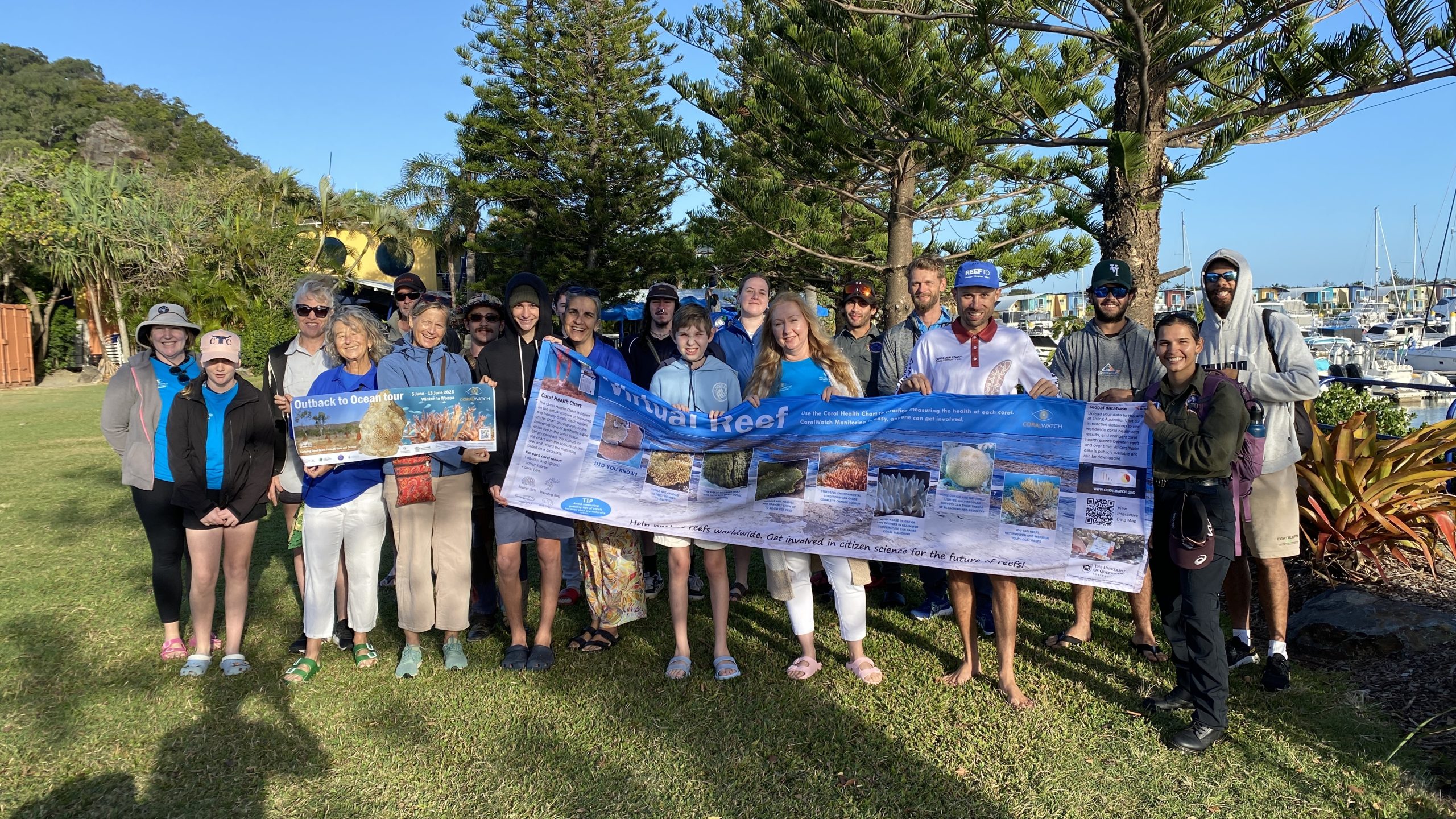
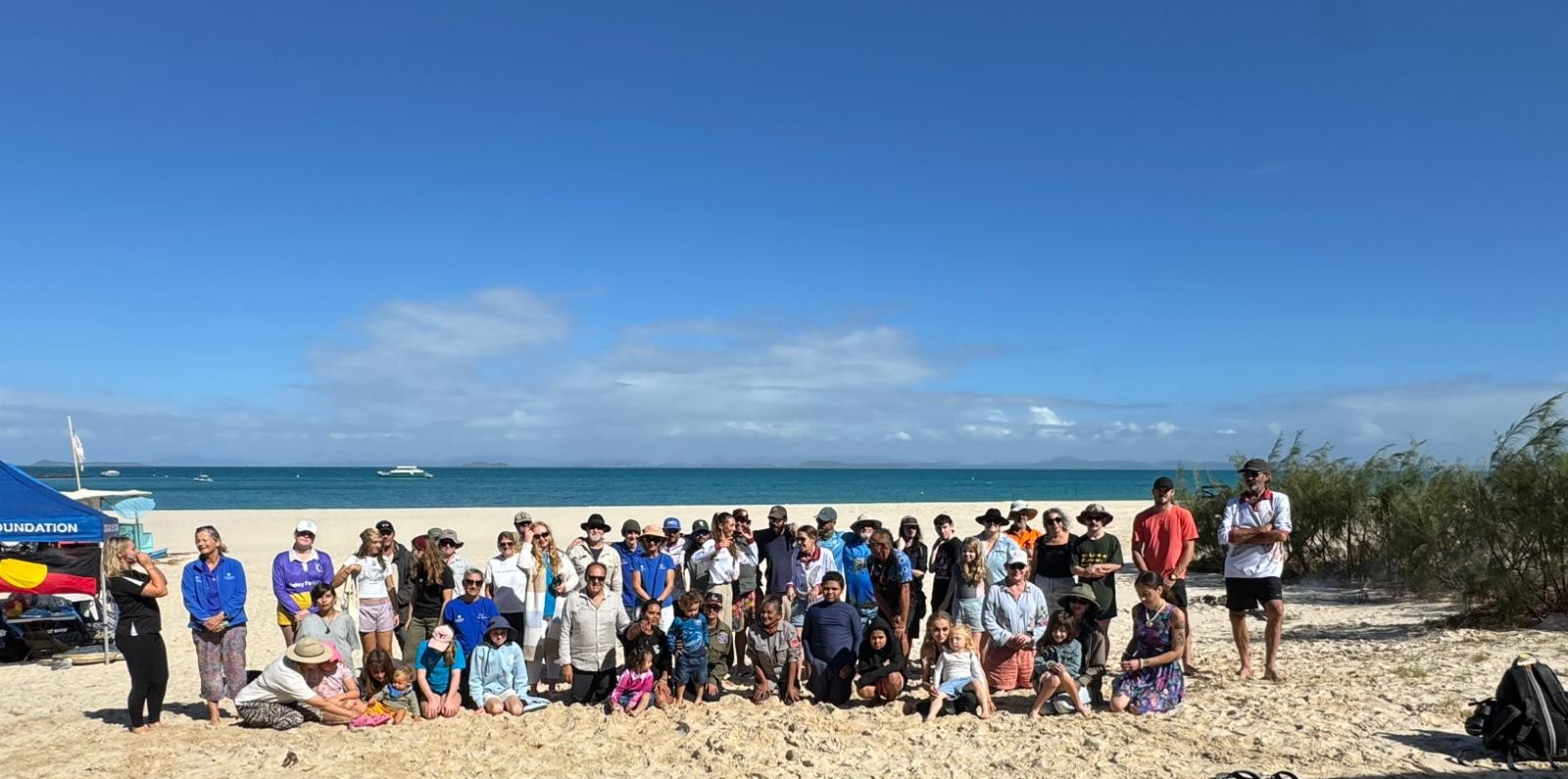
Our final stop of the tour brought us to Woppa (Great Keppel Island) for a collaborative citizen science community day hosted in partnership with the CoralWatch Yeppoon Youth Ambassadors and the Woppaburra TUMRA Aboriginal Corporation.
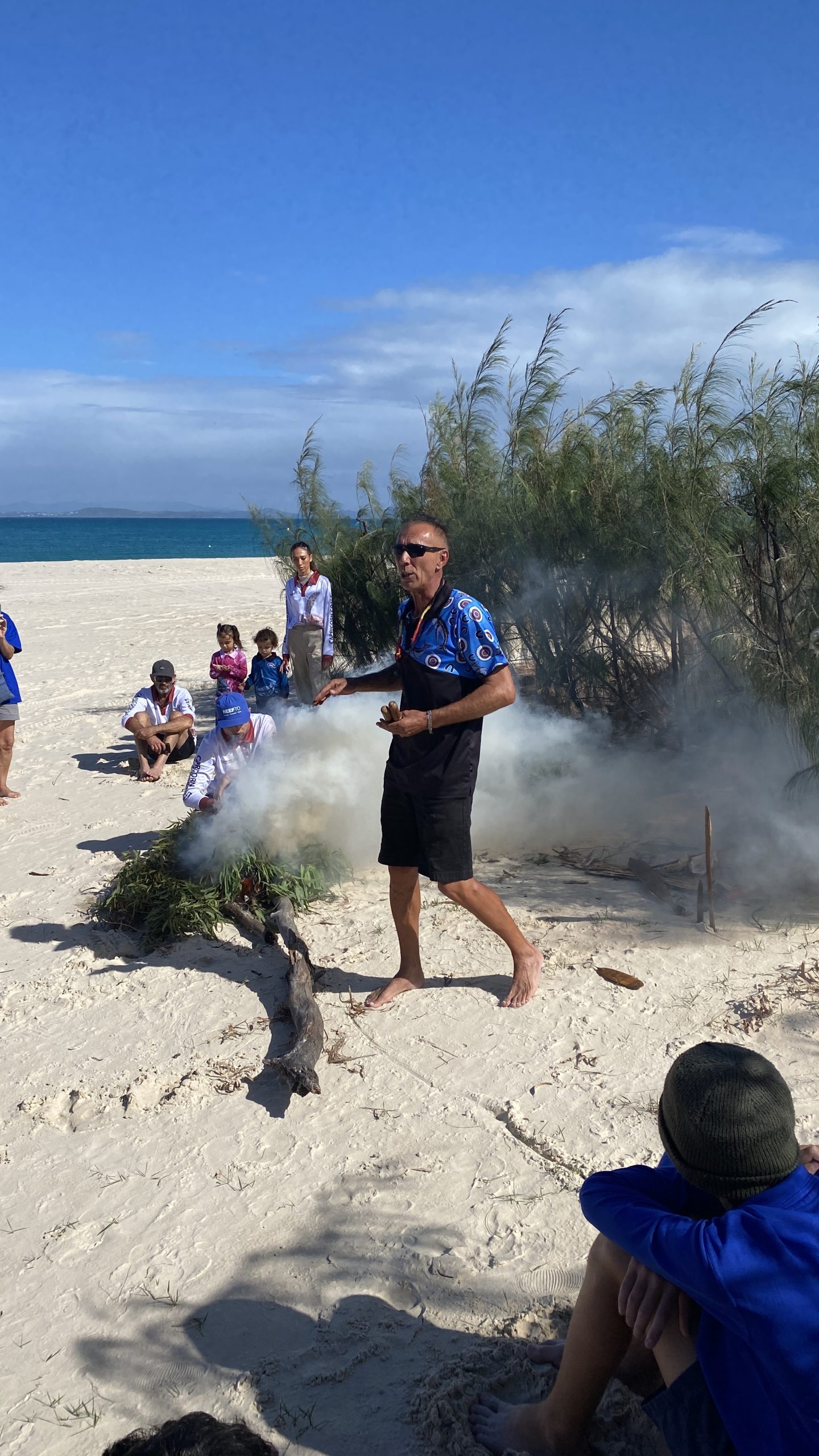
The family-friendly event opened with a Welcome to Country by Uncle Sonny Van Issum and Nerark Morris, followed by introductions to the Woppa TUMRA program and the CoralWatch Ambassadors.
A range of interactive stalls invited participants to engage with reef science and conservation, including virtual reality experiences, quizzes, turtle models, games, and citizen science activities focused on coral health monitoring.
We were also joined by the Capricorn Coast Marine Community, who shared important insights into the impacts of marine debris on marine ecosystems.
The day provided a fitting conclusion to the Outback to Ocean journey, connecting science, culture, and community on the reef itself.
Acknowledgements
The CoralWatch Outback to Ocean tour is proudly supported by a Queensland Engaging Science Grant.
Sincere thanks to our collaborators:
- CUC RAPAD CWQ
- Barcaldine Country Women’s Association
- Woppaburra TUMRA Aboriginal Corporation
- Woppaburra Saltwater Aboriginal Corporation RNTBC
- Capricorn Conservation Council
- Keppel Dive & Snorkel
- Livingstone Shire Council